
Chattooga Quarterly
Spring 2002
Tragedy of the Commons
Carol Greenberger
Unchecked industry diminishes the quality of “common” resources like air.
Imagine for a moment that you own two big dogs (let’s call them Jake and Lucky) and you have a nice fenced back yard where they can play. Your town also has a park nearby with a large area where dogs are allowed to be off their leashes. You notice that your own back yard is being ruined by the dogs digging and playing, and you constantly have to get out the pooper scooper. But, if you spend as much time as you can with your dogs at the park, your yard stays nicer, and besides, there’s no scooper law in your town. So, that’s where you hang out with Jake and Lucky. After a while you notice that more people are doing the same thing as you – using the park to exercise their dogs and keep their own yards neater. It’s working for you, so you spend more and more afternoons there. In time, the park begins to deteriorate. There are holes dug everywhere, bare trails where the dogs’ running and playing has killed the grass. And you better watch where you step. This, my friends, is the “tragedy of the commons.”
In the mid 1800s, William Forster Lloyd, an Oxford mathematician, wrote an essay on resources and the effects of individual decision making on society as a whole. Lloyd examined the fate of a pasture held in common by a group of herdsmen. These herdsmen owned individual parcels of land on which they grazed their cattle. They also could utilize a public pasture, the commons, owned by the village for the benefit of the entire community. Some grazed their cattle each day in the commons, preferring to save their own land and use the common pasture that seemed to be of no cost to them as individuals. Herdsmen, acting in self- interest, added more animals to their flock in the commons. As others began to do the same, the commons were overgrazed and became useless to everyone. The ability of the commons, with its fixed supply, to support animals was finite. The limit, its carrying capacity, was exceeded. Lloyd said that it was inevitable that the commons would be exploited to exhaustion and the result would be tragedy. His theory states that a resource owned collectively will be destroyed by each individual overusing that resource, ignoring the group’s collective interests in favor of their own. This contrasted a school of thought prevalent at the time, championed by 18th century economist Adam Smith, which held that decisions reached individually would be the best decisions for an entire society. Smith’s “invisible hand” theory stated that each individual pursuing his or her own good is led, as if by an invisible hand, to achieve the best good for all.
Commons can best be described as any resource held collectively by a group of people, all of whom have access and who gain benefit with increasing access. Each resource has a carrying capacity that is the maximum amount of use it can support. Once a resource is being used near its limit, additional use will degrade its value to its current users. Users typically enter a cycle of additional use to gain personally as others use the resource. Since all users behave in this manner, the resource is ultimately doomed. “Ruin is the destination toward which all men rush, each pursuing his own best interest in a society that believes in the freedom of the commons” was the view held by Garret Hardin, an ecologist from California who studied Lloyd’s work.
In 1968 Hardin applied the Tragedy of the Commons theory to population growth and its effects on the earth’s finite resources. His essay appeared in Science and has been included since then in works on almost every subject, including ecology, environmentalism, health care, philosophy, political science, ethics, sociology, law, psychology and economics. His thesis illustrated the need to combine political and social theory with biological data. Hardin stated, “A finite world can support only a finite population: therefore, population growth must eventually equal zero.” He painted a bleak picture of the future, calling for social rather than technical solutions and rigorous regulation of human population. Hardin said, “Freedom to breed will bring ruin to all.” It is probably no surprise that Hardin’s work was perceived as revolutionary and caused quite a stir. Paul Hawken in his 1993 work, The Ecology of Commerce, commented along those same lines when he said, “5.5 billion people are breeding exponentially. The process of fulfilling their wants and needs is stripping the earth of its biotic capacity to produce life; a climactic bust of consumption by a single species is overwhelming the skies, earth, water and fauna.”
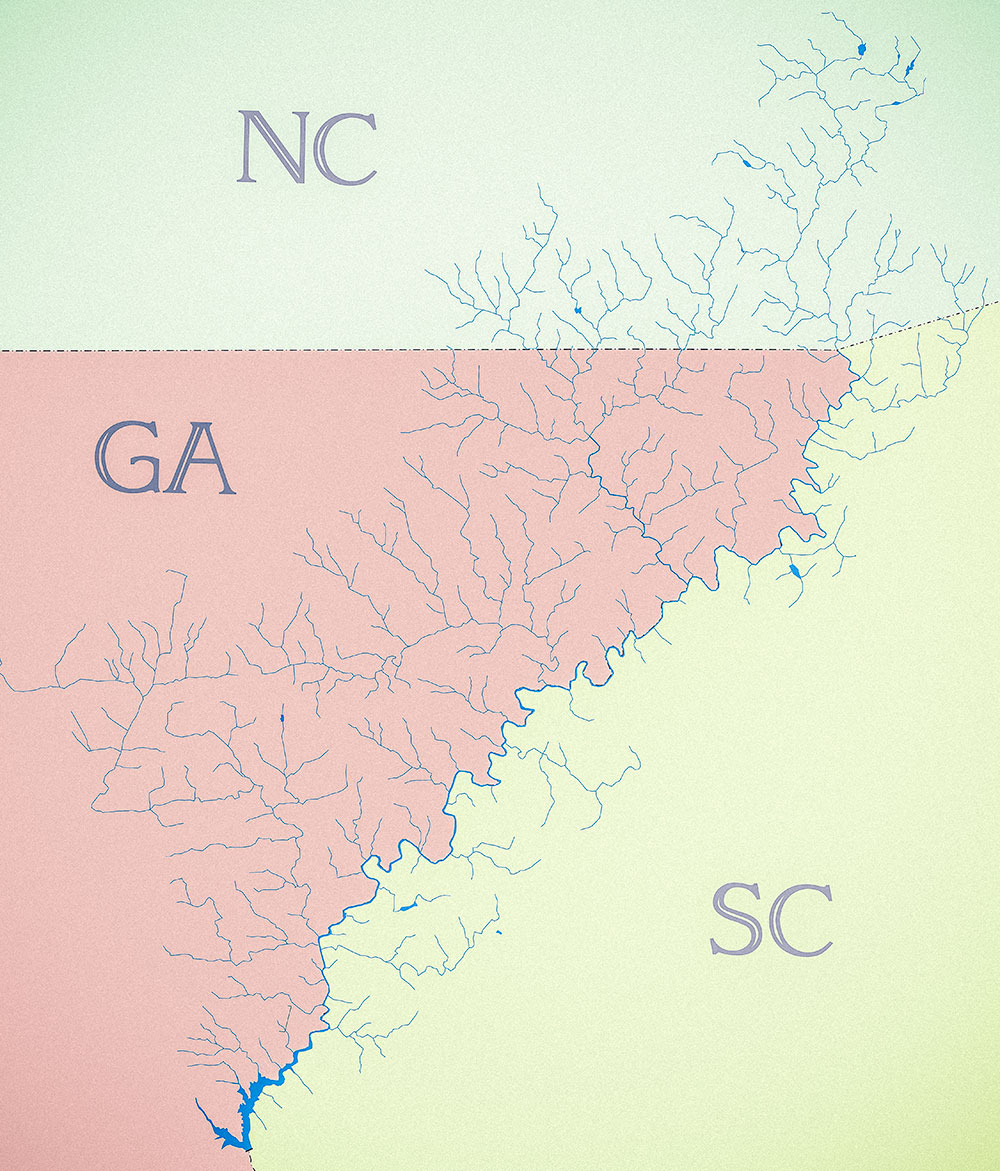
Hardin went on to relate the Tragedy of the Commons theory to other environmental concerns, such as national parks and pollution. National parks are currently open to all, without limit. Anyone who has visited Yellowstone or Yosemite or the Smoky Mountains in the summer knows how this theory applies. The collective resource is overused by individuals concerned with their own interests over the interests of the entire group. The experience you hope for when visiting a national park is diminished by the vast numbers of other visitors, hoping for their own unique experience. Traffic, standing in line to view a geyser, camping close to hundreds of other campers all detract from your personal visit. But, what is the answer? Should the parks limit their maximum number of daily visitors and turn away taxpayers whose dollars have contributed to the parks? Should they be sold off as private property? Most of the recently proposed solutions seem objectionable, yet the current overuse of these resources is damaging the very property we aim to protect. Closer to home is the proposed Amendment 14, Recreational Boating Use on the Chattooga Wild and Scenic River, to the existing river management plan that would allow increased usage of the river. At contention is determination of the river’s carrying capacity, the point at which additional use will degrade the value as a wilderness experience to its current users and to the ecosystem itself.
Pollution, Hardin said, presents the tragedy of the commons in a reverse manner. This is not a question of taking something out of the commons, but putting something in – toxins and waste into the air and water, trash into dumps, chemical and oil spills into the ground and groundwater. Hardin theorized “The rational man finds that his share of the costs of the wastes he discharges into the common is less than the cost of purifying his wastes before releasing them.” Laws or taxes, he reasoned, would be the solution in making it cheaper for the polluter to treat his pollutants than to discharge them untreated. We can see today that his solution has limited application, and the pollution problem continues to spiral out of control. The tragedy is being played out in the air we breathe and the water we drink.
Commercial fishing offers classic examples of commons issues that can be local, regional or global. Over-fishing on each of these levels has led to the total or near extinction of many species of sea life. In 1625, a Dutch scholar said, “The extent of the ocean is in fact so great that it suffices for any possible use on the part of all peoples for drawing water, for fishing, for sailing.” Today we know that the ocean’s resources are limited. The decline of once booming fisheries and whale populations is a direct result of overexploitation brought on by the world’s maritime nations treating the oceans as a commons. Individual nations have imposed restrictions on their own fishing practices that are negated by other countries continuing to pursue their own self interests and exceeding the oceans’ carrying capacities.

A landfill next to a water source threatens the quality of everyone’s water.
Overgrazing on public lands, destruction of the rain forests, ozone depletion, global warming and over-fishing are all instances where individual rational behavior can cause long-range harm to our collective environment, and ultimately oneself. Many people rely on others to make sacrifices and are generally inclined to act for themselves, rather than for the good of society as a whole. Unfortunately, knowing the conditions that lead to a tragedy does not mean it can be easily avoided. Averting tragedy requires limiting both consumption and access. Hardin and others have argued that restraint will best be achieved through coercion, administered by outside agents. Hardin said, “To many, the word coercion implies arbitrary decisions of distant and irresponsible bureaucrats; but this is not a necessary part of its meaning. The only kind of coercion I recommend is mutual coercion, mutually agreed upon by the majority of the people affected.”
Twenty-five years after writing his revolutionary essay, Garret Hardin believes its message is still true. He wrote, “The more the population exceeds the carrying capacity of the environment, the more freedoms must be given up.” What freedoms can we give up as individuals to help protect the environment without impacting our quality of life? There are many small things we can each do every day that can have an impact, and help preserve our big, rotating common: Earth.
Conserve water – For one day use water in your normal manner, but try to notice ways you can use less. Do you leave the tap on in the sink when you’re not using the water? Do you water your lawn in the middle of the day? Have you seen sprinklers that are on timers, running while it’s raining?
Minimize your trash – One community in the northeast came up with a system that greatly reduced the amount of trash thrown out by their community. Trash was only picked up if it was in a special bag that had to be purchased from the county. Therefore, everyone paid based on how much trash they threw out. Do you recycle? Do you recycle everything that can be recycled? Do you reuse items as much as possible?
Pollute less – Drive less, drive smarter. Is your vehicle fuel efficient? Do you plan your errands to minimize trips to the store? Do you throw candy wrappers out your window? Do you throw cigarette butts in parking lots? Do you ever pick up trash that you see that wasn’t yours?
The concept of our ultimate tragic fate has roots that go back to Aristotle who said, “What is common to the greatest number has the least care bestowed upon it.” The tragedy of the commons can be averted if we all work together. Do we need coercion? Maybe. But maybe if we think about the possible future tragedy, talk about it and act on it, we can help save our environment voluntarily.