

Our mission is to protect, promote and restore the natural ecological integrity of the Chattooga River watershed ecosystems; to ensure the viability of native species in harmony with the need for a healthy human environment; and to educate and empower communities to practice good stewardship on public and private lands.
Store
Show your support with Chattooga Conservancy shirts and stickers!
Interactive Map
Explore the Watershed
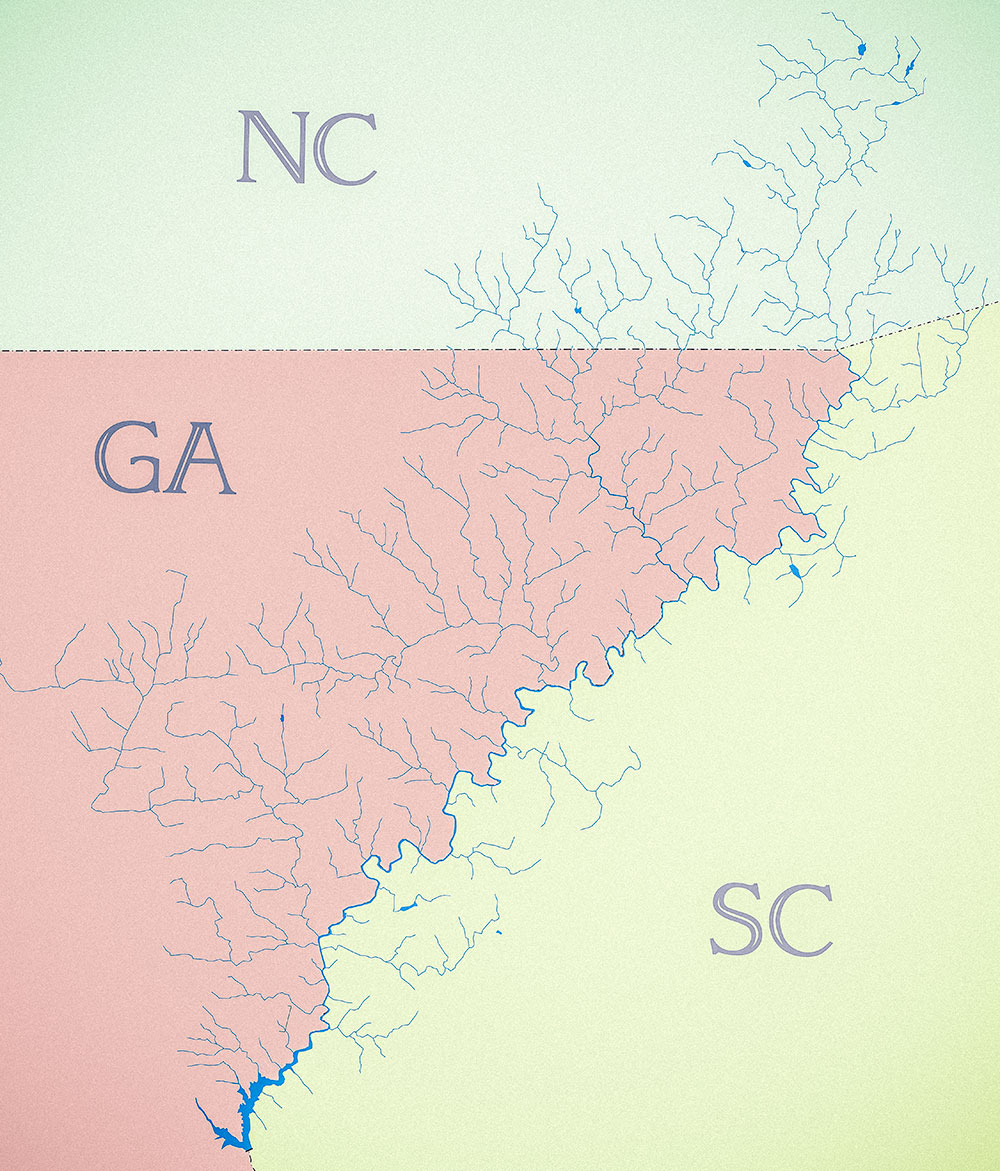
Known as the “Crown Jewel” of the Southeast, the Chattooga was the first river east of the Mississippi to be granted the National Wild & Scenic designation in 1974. Since then, the Chattooga River has been protected along a 15,432-acre corridor as a Wild & Scenic River. Of the river’s approximate 57-mile length, 39.8 miles are designated “wild”, about 2.5 miles “scenic”, and 14.6 miles “recreational”.
The Chattooga River originates in the Southern Appalachian Mountains of North Carolina at the base of Whiteside Mountain, a massive 4,800-foot granite monolith on the escarpment known to the Cherokee as the“Great Blue Wall.” It is one of seven rivers that flow from the Blue Ridge Escarpment, an area marked by high rainfall and unusual biological diversity. The terrain is abrupt and deeply dissected with many spectacular gorges.
From its source at the headwaters at an elevation of 3,360 feet until it flows into Tugaloo Lake, the Chattooga River descends 2,469 feet in elevation, making it one of the best whitewater recreational rivers in the eastern United States. It was because of these and other unique values that the Chattooga River was chosen by Congress as one of the first 27 rivers to be studied for possible inclusion in the National Wild and Scenic Rivers System.
Help protect the Chattooga River watershed by becoming a member of the Chattooga Conservancy.

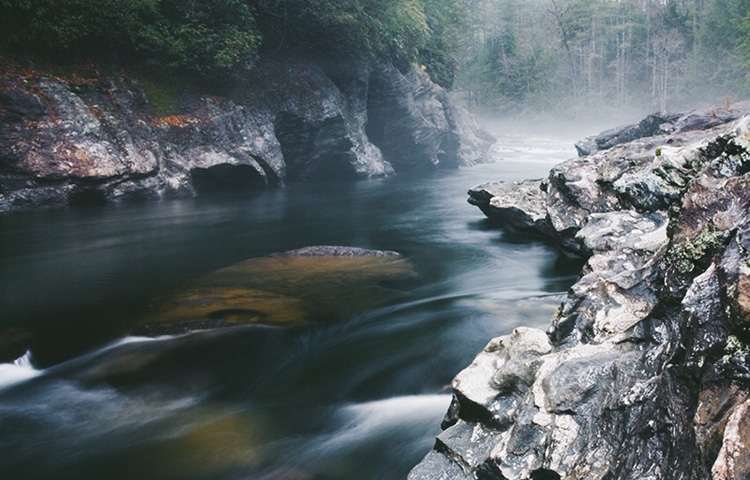
Find ways to enjoy the Wild and Scenic Chattooga River while minimizing your environmental impact.
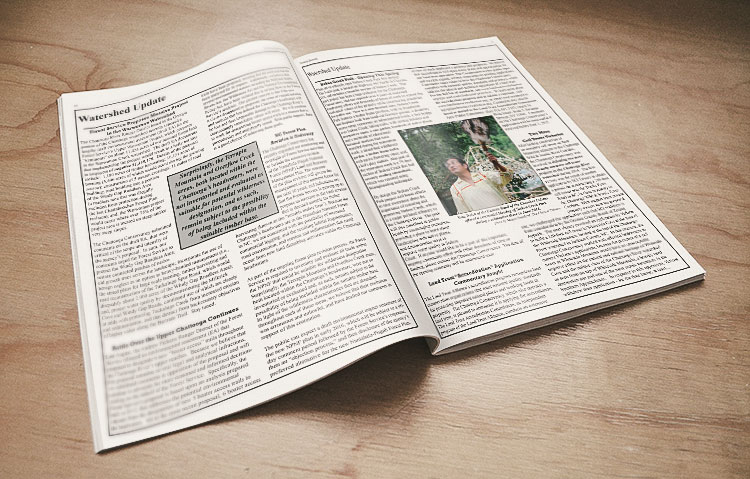
Features articles on the watershed’s history, updates on initiatives, articles about conservation, & membership news.
If you would like to stay in the loop on everything we have going on at the Chattooga Conservancy, including receiving alerts when immediate action is needed, and receiving notification of upcoming events in the watershed and volunteer opportunities for our various initiatives, please subscribe to our email list! If you change your mind, you can always unsubscribe at any time with no questions asked.